


Business Programme
17 March
09:30–10:45
Lomonosov Cluster of the Sparrow Hills ISTC of Moscow State University, 1st floor, conference hall 2
Broadcast
Healthy Diet: Myths and Reality, Opportunities and Risks
People and the Environment
People’s approaches to a healthy diet are rapidly changing. The classic food pyramid is being completely rethought under the influence of new scientific data. People are replacing universal recommendations with personalized strategies that aim to maintain their health, prevent disease, and improve their quality of life. The emphasis is shifting from counting calories to a holistic assessment of one’s diet, including its suitability for a person’s specific lifestyle or activity. The modern nutrition paradigm integrates cutting-edge approaches from longevity medicine and sports science and also takes into account the timing of meals (chrononutrition) and the selection of the most nutritious foods. The changing structure of the food market, with a sharp increase in ready-to-eat food sales, is significantly influencing diet. This is all contributing to the formation of new eating habits. What are some healthy eating habits in today’s reality, and what factors shape them? What scientific research into healthy nutrition needs to be developed? How can we combine efforts to generate demand for healthy eating while also increasing the supply of truly healthy products? How can we communicate the lifelong health benefits of good nutrition to the public and foster a society-wide, conscious commitment to healthy eating habits?
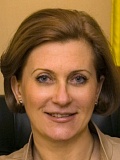 Anna Popova — Head of the Federal Service for Surveillance on Consumer Rights Protection and Human Wellbeing; Chief State Sanitary Physician of the Russian Federation
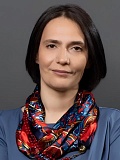 Nina Akovbyan — Vice President of Research and Development, Milk Logic
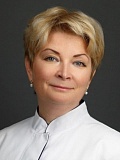 Olga Bezlepkina — Deputy Director, I.I. Dedov National Medical Research Center of Endocrinology of the Ministry of Health of the Russian Federation
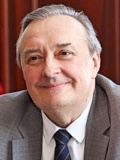 Oleg Kobyakov — Director, Liaison Office with the Russian Federation, Food and Agriculture Organization of the United Nations (FAO)
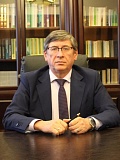 Sergey Kuzmin — Director, F.F. Erisman Federal Scientific Center of Hygiene of Rospotebnadzor
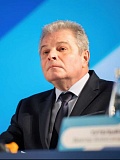 Dmitry Nikityuk — Director, Federal Research Centre of Nutrition and Biotechnology
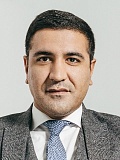 Revaz Yusupov — Deputy General Director, Advanced Technologies Development Center (ATDC)
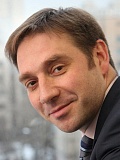 Sergey Belyakov — President, Association of Prepared Food Producers and Suppliers
Moderator:
 Anna Popova — Head of the Federal Service for Surveillance on Consumer Rights Protection and Human Wellbeing; Chief State Sanitary Physician of the Russian Federation
Ms. Popova, M.D., has a degree in medicine and prophylactics, professor in medical hygiene.
Worked as an epidemiologist, chief of epidemiology at Budennovsk hospital, chief epidiemologist in State Center in Serpukhov and Pushino, deputy head of Rospoterbnadzor in Moscow oblast, head of HR or Rospoterbnadzor and deputy chief of Rospotrebnadzor .
After a decree of the government of Russian Federation government N1931 temporary acted as chief of Federal Agency for consumer protection and human wellbeing from October 23, 2013.
Following a decree of the government of Russian Federation N571-p appointed head of Rospoterbnadzor.
Married, has two children
Worked as an epidemiologist, chief of epidemiology at Budennovsk hospital, chief epidiemologist in State Center in Serpukhov and Pushino, deputy head of Rospoterbnadzor in Moscow oblast, head of HR or Rospoterbnadzor and deputy chief of Rospotrebnadzor .
After a decree of the government of Russian Federation government N1931 temporary acted as chief of Federal Agency for consumer protection and human wellbeing from October 23, 2013.
Following a decree of the government of Russian Federation N571-p appointed head of Rospoterbnadzor.
Married, has two children
Speakers:
 Nina Akovbyan — Vice President of Research and Development, Milk Logic
 Olga Bezlepkina — Deputy Director, I.I. Dedov National Medical Research Center of Endocrinology of the Ministry of Health of the Russian Federation
 Oleg Kobyakov — Director, Liaison Office with the Russian Federation, Food and Agriculture Organization of the United Nations (FAO)
 Sergey Kuzmin — Director, F.F. Erisman Federal Scientific Center of Hygiene of Rospotebnadzor
 Dmitry Nikityuk — Director, Federal Research Centre of Nutrition and Biotechnology
 Revaz Yusupov — Deputy General Director, Advanced Technologies Development Center (ATDC)
Front row participant:
 Sergey Belyakov — President, Association of Prepared Food Producers and Suppliers
Sergey joined Ozon in 2021 to oversee strategic projects and initiatives tied to the Company's e-commerce development. A longtime civil servant, Sergey worked at the Russian Ministry of Economic Development from 2008, going on to serve as Deputy Minister from 2012 to 2014. Prior to joining the Ministry, he worked at the Russian Union of Industrialists and Entrepreneurs. In 2016, Sergey was elected President of the Alliance of Pension Funds, an association of non-governmental pension funds. From 2018 to 2021 he headed the Russian Association of Retail Companies (AKORT). Sergey holds a degree in Law from the Academy of the Federal Security Service of Russia.
17 March
11:15–12:30
Lomonosov Cluster of the Sparrow Hills ISTC of Moscow State University, 3rd floor, conference hall 4
Broadcast
Where Does Health Begin? A Task for All of Us
People and the Environment
Today, each member of society is directly responsible for maintaining his/her health, regardless of his/her social role: employee or employer, physician or patient, parent or healthcare provider, resident of a large city or a small region. A key trend in the current stage of the healthcare industry’s development is the transition from a passive model of disease treatment to an active model of health management. This represents an evolution from responding to existing illnesses to the development of predictive and preventive medicine, i.e., pre-risk medicine. This approach shifts the focus from combatting to preventing diseases. However, this goal cannot be achieved without the seamless integration of healthy lifestyle principles into everyone’s daily routine and the introduction of modern risk modification technologies. What consistent steps must be taken at the state and societal levels to transform prevention from an obligation to a natural way of life? What role do employers play in fostering a culture of health, and what corporate healthcare tools and programmes are most effective today? How can scientific advances be quickly introduced into accessible practice?
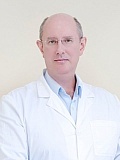 Aleksandr Rozanov — Director, Association of Medical Specialists on Risk Modification
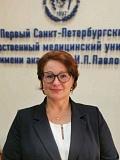 Elena Isaeva — Head of the Department of General and Clinical Psychology, Pavlov First Saint Petersburg State Medical University; Chief Freelance Medical Psychologist of the Saint Petersburg Health Committee
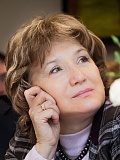 Larisa Popovich — Director, Institute for Health Economics, National Research University Higher School of Economics
 Ivan Rybakov — Head, "Corporate Well-Being" All-Russian Project
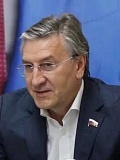 Airat Farrakhov — Member of the State Duma Committee of the Federal Assembly of the Russian Federation on Budget and Taxes; Deputy of the State Duma of the Federal Assembly of the Russian Federation; Vice-President, National Medical Chamber
 Oles Shevchenko — Chairman, Professional Society of Dental Hygienists of Russia
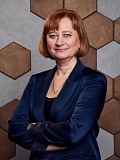 Elena Yashina — Advisor to the General Director, Tatneft
Moderator:
 Aleksandr Rozanov — Director, Association of Medical Specialists on Risk Modification
Speakers:
 Elena Isaeva — Head of the Department of General and Clinical Psychology, Pavlov First Saint Petersburg State Medical University; Chief Freelance Medical Psychologist of the Saint Petersburg Health Committee
 Larisa Popovich — Director, Institute for Health Economics, National Research University Higher School of Economics
Education: MSU (Higher nervous activity biologist-physiologist), Academy of the National Economy under the Government of the Russian Federation (Economics, finance and insurance), the Federal Supervision Service for Healthcare of the Russian Federation (Public health and organisation of healthcare), CSc (biology). Has been a WHO expert.
Up to 1997: worked at scientific institutions of the Academy of Sciences and the Academy of Medical Sciences.
1997–2009: ROSNO-MS insurance company (Senior Deputy General Director, member of the Board of Directors).
Since 2009: the Higher School of Economics National Research University (expert, scientific and educational activities). Key clients: Government of the RF and authorities of constituent entities of the RF.
Experience of public work:
• Member of the Expert Council of the Russian Government.
• Expert of the Strategic Initiative Agency.
• Head of working group of the Co-ordinating Committee for Public-private Partnership, Ministry of Health of the RF.
• Head of commission of the Public Council under the Federal Supervision Service for Healthcare of the Russian Federation (Roszdravnadzor).
Professional interests:
• organisation and economic of healthcare;
• modern medical and social technologies;
• social and medical insurance;
• provision of medicines and medical equipment;
• public-private partnership in the social sphere.
Up to 1997: worked at scientific institutions of the Academy of Sciences and the Academy of Medical Sciences.
1997–2009: ROSNO-MS insurance company (Senior Deputy General Director, member of the Board of Directors).
Since 2009: the Higher School of Economics National Research University (expert, scientific and educational activities). Key clients: Government of the RF and authorities of constituent entities of the RF.
Experience of public work:
• Member of the Expert Council of the Russian Government.
• Expert of the Strategic Initiative Agency.
• Head of working group of the Co-ordinating Committee for Public-private Partnership, Ministry of Health of the RF.
• Head of commission of the Public Council under the Federal Supervision Service for Healthcare of the Russian Federation (Roszdravnadzor).
Professional interests:
• organisation and economic of healthcare;
• modern medical and social technologies;
• social and medical insurance;
• provision of medicines and medical equipment;
• public-private partnership in the social sphere.
 Ivan Rybakov — Head, "Corporate Well-Being" All-Russian Project
 Airat Farrakhov — Member of the State Duma Committee of the Federal Assembly of the Russian Federation on Budget and Taxes; Deputy of the State Duma of the Federal Assembly of the Russian Federation; Vice-President, National Medical Chamber
Work experience
State Duma of the Federal Assembly Russian Federation, Moscow, Russia:
Member of the State Duma VII convocation, committee on budget and taxes
• Chairman of the subcommittee on:
• Budget for the Russian pension fund
• Federal Fund for Compulsory Health Insurance
• Social Security Fund budget
Ministry of Finances of Russia, Moscow, Russia:
The Deputy Minister
• Budgetary activities in healthcare, civil sciences, culture, education, physical culture and sports, tourism, youth policy, pensions and social security for civilians, social insurance, employment; in the 2014 Olympic Winter Games in Sochi, the preparation and hosting of the 2018 FIFA World Cup.
Ministry of Health care of Russia, Moscow, Russia:
The Deputy Minister
• Healthcare industry finances (obligatory investments, federal and regional budget, private investments)
• Health care digitalization
Ministry of Health care of republic of Tatarstan, Kazan, Russia:
The Minister, member of government board of republic of Tatarstan
• Ensured an increase in the volume of high-tech medical care by three times, reduced the incidence of child morbidity and mortality, increased life expectancy due to a decrease in mortality
• Reformed the structure of medical care by optimizing inefficient medical organizations, restructuring the financial support for the program of state guarantees
State Duma of the Federal Assembly Russian Federation, Moscow, Russia:
Member of the State Duma VII convocation, committee on budget and taxes
• Chairman of the subcommittee on:
• Budget for the Russian pension fund
• Federal Fund for Compulsory Health Insurance
• Social Security Fund budget
Ministry of Finances of Russia, Moscow, Russia:
The Deputy Minister
• Budgetary activities in healthcare, civil sciences, culture, education, physical culture and sports, tourism, youth policy, pensions and social security for civilians, social insurance, employment; in the 2014 Olympic Winter Games in Sochi, the preparation and hosting of the 2018 FIFA World Cup.
Ministry of Health care of Russia, Moscow, Russia:
The Deputy Minister
• Healthcare industry finances (obligatory investments, federal and regional budget, private investments)
• Health care digitalization
Ministry of Health care of republic of Tatarstan, Kazan, Russia:
The Minister, member of government board of republic of Tatarstan
• Ensured an increase in the volume of high-tech medical care by three times, reduced the incidence of child morbidity and mortality, increased life expectancy due to a decrease in mortality
• Reformed the structure of medical care by optimizing inefficient medical organizations, restructuring the financial support for the program of state guarantees
 Oles Shevchenko — Chairman, Professional Society of Dental Hygienists of Russia
 Elena Yashina — Advisor to the General Director, Tatneft
17 March
15:15–16:30
Lomonosov Cluster of the Sparrow Hills ISTC of Moscow State University, 1st floor, conference hall 2
Broadcast
Health in Your Daily Planner: How to Avoid Ignoring a Healthy Lifestyle in the Era of Multitasking
People and the Environment
Such modern realities as a fast-paced lifestyle, a culture of multitasking, an abundance of unhealthy food, physical inactivity, and chronic cognitive overload all create an environment in which classic notions of a healthy lifestyle seem virtually impossible to achieve. Today, the main challenge is not about finding extra time for a healthy lifestyle, but seamlessly integrating it into the fabric of your everyday life. This approach requires a rethinking of your core habits. In terms of physical activity, the emphasis is shifting from hours-long workouts in the gym to short but regular high-intensity interval training and ‘sports microbreaks’. In nutrition, the strategy is drifting away from strict diets toward the conscious creation of a ‘nutritious plate’ that ensures you feel full for a long time and have a stable level of energy without all the gruelling calorie counting. New behavioural patterns are also built on this same principle of constructive substitution: alcohol consumption is evolving with complex non-alcoholic alternatives, and people are systematically giving up smoking. What psychological barriers do people face when trying to incorporate ‘healthy micro-habits’ into their busy schedules? What are some quick and healthy alternatives to common unhealthy snacks for those who have little time? What exercises or workouts are easiest to integrate into an office or home routine without special equipment?
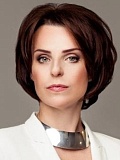 Elena Aksenova — Director, Research Institute for Healthcare Organization and Medical Management of Moscow Healthcare Department
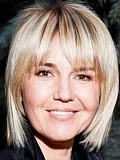 Julia Bordovskikh — Health Coach; Brand Creator, Vitamin L
 Maxim Gittya — Head coach of the Russian National Team in Universal Fight
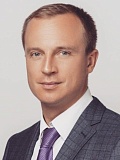 Vladimir Goncharevich — Director of Interaction with Regional and Foreign Government Authorities, Ozon
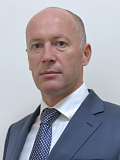 Victor Fisenko — First Deputy Minister of Health of the Russian Federation
Moderator:
 Elena Aksenova — Director, Research Institute for Healthcare Organization and Medical Management of Moscow Healthcare Department
Elena Aksenova has been working at the Research Institute since December 2018.
Educated at Moscow State Pedagogical University, National Research University Higher School of Economics, Russian Presidential Academy of National Economy and Public Administration.
She worked as Vice-Rector for Development and Innovation at the I.M. Sechenov First Moscow State Medical University of the Russian Ministry of Health. She was Deputy Head of the Department of Innovative Development of Medical Science of RAMS, Head of the Expert Analytical Department of the Federal Agency for Scientific Organizations, Deputy Chief Scientific Secretary of the Presidium of the Russian Academy of Sciences.
Before assuming the position of Director of the Research Institute for Innovative Development of Medical Science of the DSMH, she was the Head of the Center for Strategic Planning of Science Development, Expertise and Scientific Advice of the RAS.
Educated at Moscow State Pedagogical University, National Research University Higher School of Economics, Russian Presidential Academy of National Economy and Public Administration.
She worked as Vice-Rector for Development and Innovation at the I.M. Sechenov First Moscow State Medical University of the Russian Ministry of Health. She was Deputy Head of the Department of Innovative Development of Medical Science of RAMS, Head of the Expert Analytical Department of the Federal Agency for Scientific Organizations, Deputy Chief Scientific Secretary of the Presidium of the Russian Academy of Sciences.
Before assuming the position of Director of the Research Institute for Innovative Development of Medical Science of the DSMH, she was the Head of the Center for Strategic Planning of Science Development, Expertise and Scientific Advice of the RAS.
Speakers:
 Julia Bordovskikh — Health Coach; Brand Creator, Vitamin L
 Maxim Gittya — Head coach of the Russian National Team in Universal Fight
 Vladimir Goncharevich — Director of Interaction with Regional and Foreign Government Authorities, Ozon
Artyom Spiro — Entrepreneur, Restaurateur, Healthy Nutrition Expert
 Victor Fisenko — First Deputy Minister of Health of the Russian Federation