


Business Programme
17 March
09:30–10:45
Lomonosov Cluster of the Sparrow Hills ISTC of Moscow State University, 3rd floor, conference hall 4
Broadcast
Living Longer and Better: A Longevity Strategy for Individuals and Countries
Healthcare Innovations and Technologies
A key challenge of modern healthcare is to shift the focus from simply increasing life expectancy to building an individual trajectory for healthy longevity. This involves maximizing your quality of life and preserving your energy, mental clarity, and functional activity for many years to come. Healthy longevity medicine shifts the focus from treating diseases to proactive management and prevention, where nutrition and physical activity serve as tools that can influence the underlying mechanisms of aging. To create a culture of healthy longevity, the role of nutrition must be completely reconceptualized. Today, it is not simply a matter of satisfying your hunger, but a comprehensive strategy that provides your body with high-quality fuel for a long and active life. Physical activity, for its part, has established itself as an accessible tool for influencing the underlying mechanisms of aging. Today, this concept involves not only going to the gym, but also any systematic activity that becomes integrated into your lifestyle: from running and swimming to seasonal activities such as skiing and ice skating. What consistent steps need to be taken at the government, societal, and individual levels to transform the philosophy of healthy longevity into a daily norm? Is there a gold standard for the duration and intensity of health-promoting physical activity? What are some of the most promising innovative technologies for preventing premature aging?
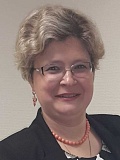 Elena Skachkova — Deputy Director, Department of Health of the Government of the Russian Federation
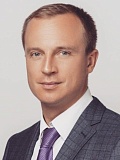 Vladimir Goncharevich — Director of Interaction with Regional and Foreign Government Authorities, Ozon
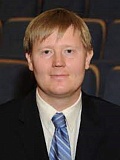 Alexey Moskalev — Director of the Institute of Biology of Aging and Healthy Longevity Medicine with a Clinic of Preventive Medicine, Academician B.V. Petrovsky Russian Scientific Center of Surgery of the Ministry of Science and Higher Education of the Russian Federation
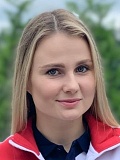 Aleksandra Patskevich — Three-time Olympic Champion in Synchronized Swimming
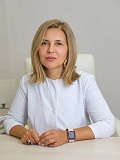 Olga Tkacheva — Director of the Russian Gerontological Research and Clinical Center, N.I. Pirogov Russian National Research Medical University of the Ministry of Health of the Russian Federation; Chief Visiting Geriatrician Specialist of the Ministry of Health of the Russian Federation
 Vladimir Filippov — Deputy Head of the Department of Labor and Social Protection of the Population of Moscow
Moderator:
 Elena Skachkova — Deputy Director, Department of Health of the Government of the Russian Federation
Speakers:
 Vladimir Goncharevich — Director of Interaction with Regional and Foreign Government Authorities, Ozon
 Alexey Moskalev — Director of the Institute of Biology of Aging and Healthy Longevity Medicine with a Clinic of Preventive Medicine, Academician B.V. Petrovsky Russian Scientific Center of Surgery of the Ministry of Science and Higher Education of the Russian Federation
 Aleksandra Patskevich — Three-time Olympic Champion in Synchronized Swimming
 Olga Tkacheva — Director of the Russian Gerontological Research and Clinical Center, N.I. Pirogov Russian National Research Medical University of the Ministry of Health of the Russian Federation; Chief Visiting Geriatrician Specialist of the Ministry of Health of the Russian Federation
Olga Tkacheva graduated with honours from S.M. Kirov Gorky State Medical Institute majoring in General Medicine and the therapy internship in S.M. Kirov Gorky State Medical Institute. In 1993, Olga Tkacheva was awarded the scientific degree of Candidate of Medical Sciences, in 1999 – Doctor of Medical Sciences. In 2006, she earned the title of professor. Ms Tkacheva has 32 years of clinical work experience and 28 years of teaching under her belt.
From 2013 to 2018 – Senior Geriatrician of the Ministry of Healthcare of the Russian Federation. From 2015 – present – contracted Chief Geriatrician of the Ministry of Healthcare of the Russian Federation and Director of Russian Clinical Research Centre for Gerontology. She is the author of more than 300 scientific publications, 11 monographs, national guidelines, has one certificate and three patents for inventions.
She headed the working groups and was a member of expert committees on the preparation of national guidelines ‘Diagnosis and treatment of hypertension’, the recommendations on diagnosis and treatment of hypertension in pregnant women, national guidelines on diagnosis and treatment of cardiovascular diseases during pregnancy, guidelines on general risk reduction of disease and complications in women, practical guidelines on the use of hormone replacement therapy in peri- and postmenopausal women, national guidelines ‘Prevention of chronic non-communicable diseases’, guidelines for physicians ‘Basic Principles of the prevention and treatment of thrombosis in tables and charts’, guidelines ‘Follow-up monitoring of patients with chronic non-communicable diseases and high-risk patients’.
Olga Tkacheva’s scientific research focused on the mechanisms and patterns of the heart and blood vessels ageing and their correlation with cellular replicative ageing, the issues of the age-related metabolic disorders, prevention and treatment of age-related diseases and geriatric syndromes.
She advised on 20 candidate and five doctoral theses.
She is the president of the National Public Organization ‘Russian Association of Gerontologists and Geriatricians’, member of the National Public Organization ‘Russian Society for the Prevention of Non-Communicable Diseases’, National Public Organization ‘Russian Society of Cardiology’, National Organization ‘Russian Medical Society on Arterial Hypertension’, National Medical Society of Preventive Cardiology, European Society of Cardiology, European Geriatric Medicine Society.
She is a member of the editorial board of medical journals ‘Rational Pharmacotherapy in Cardiology’, ‘Preventive Medicine’, ‘Clinical Gerontology’, ‘Archives of Internal Medicine’, ‘Medical Care’, ‘Women’s Health Issues’, ‘Russian Open Medical Journal’, ‘Bulletin of the Ivanovo Medical Academy’.
From 2013 to 2018 – Senior Geriatrician of the Ministry of Healthcare of the Russian Federation. From 2015 – present – contracted Chief Geriatrician of the Ministry of Healthcare of the Russian Federation and Director of Russian Clinical Research Centre for Gerontology. She is the author of more than 300 scientific publications, 11 monographs, national guidelines, has one certificate and three patents for inventions.
She headed the working groups and was a member of expert committees on the preparation of national guidelines ‘Diagnosis and treatment of hypertension’, the recommendations on diagnosis and treatment of hypertension in pregnant women, national guidelines on diagnosis and treatment of cardiovascular diseases during pregnancy, guidelines on general risk reduction of disease and complications in women, practical guidelines on the use of hormone replacement therapy in peri- and postmenopausal women, national guidelines ‘Prevention of chronic non-communicable diseases’, guidelines for physicians ‘Basic Principles of the prevention and treatment of thrombosis in tables and charts’, guidelines ‘Follow-up monitoring of patients with chronic non-communicable diseases and high-risk patients’.
Olga Tkacheva’s scientific research focused on the mechanisms and patterns of the heart and blood vessels ageing and their correlation with cellular replicative ageing, the issues of the age-related metabolic disorders, prevention and treatment of age-related diseases and geriatric syndromes.
She advised on 20 candidate and five doctoral theses.
She is the president of the National Public Organization ‘Russian Association of Gerontologists and Geriatricians’, member of the National Public Organization ‘Russian Society for the Prevention of Non-Communicable Diseases’, National Public Organization ‘Russian Society of Cardiology’, National Organization ‘Russian Medical Society on Arterial Hypertension’, National Medical Society of Preventive Cardiology, European Society of Cardiology, European Geriatric Medicine Society.
She is a member of the editorial board of medical journals ‘Rational Pharmacotherapy in Cardiology’, ‘Preventive Medicine’, ‘Clinical Gerontology’, ‘Archives of Internal Medicine’, ‘Medical Care’, ‘Women’s Health Issues’, ‘Russian Open Medical Journal’, ‘Bulletin of the Ivanovo Medical Academy’.
 Vladimir Filippov — Deputy Head of the Department of Labor and Social Protection of the Population of Moscow
17 March
11:15–12:30
Lomonosov Cluster of the Sparrow Hills ISTC of Moscow State University, 1st floor, conference hall 2
Broadcast
Elements of Safety: What Each Link in the Pharmaceutical Industry Chain Brings to the Table
Healthcare Innovations and Technologies
The national goal of Russia’s ‘Long and Active Life’ project is to increase life expectancy to 78 years by 2030 and to 81 years by 2036. Achieving these targets requires coordinated interdisciplinary work and the consolidated efforts of the entire medical industry, including the pharmaceutical sector. Drug security is underpinned by state programmes and effective regulatory solutions for achieving sustainable development in the national pharmaceutical industry, both in terms of innovation and meeting the current needs of the state drug supply system. People’s access to essential medications is directly dependent on the level of professional competence of physicians, including their broad clinical awareness about a number of serious life-threatening and hereditary diseases in order to ensure early diagnosis and effective patient management. What strategies and approaches are needed to achieve sustainable drug security? What joint decisions by the government and manufacturers ensure compliance with quality, safety, and efficacy standards for medications, as well as drug accessibility? How can early diagnosis standards be incorporated into clinical practice to ensure patients have prompt access to essential therapeutic solutions? What factors can increase patient compliance with prescribed therapy?
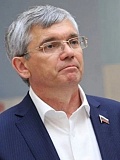 Aleksandr Petrov — Deputy, Member of the State Duma Committee on Health Protection of the Federal Assembly of the Russian Federation
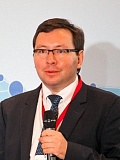 Sergey Glagolev — Deputy Minister of Health of the Russian Federation
 Kirill Danishevskiy — Vice President for Corporate Communications, Petrovax Pharm
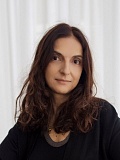 Alisa Dzhangiryants — Deputy General Director for Ensuring Access of Drugs to the Market and Oncology, Swix Healthcare
 Dmitry Kudlay — Vice President for the Introduction of New Medical Technologies, Generium
 Irina Panarina — General Manager, AstraZeneca Russia and Eurasia
 Ekaterina Priezzheva — Deputy Minister of Industry and Trade of the Russian Federation
 Alla Samoylova — Head, Federal Service for Surveillance in Healthcare (Roszdravnadzor)
 Vadim Tarasov — Vice-Rector for Scientific and Technological Development, Director, Institute of Translational Medicine and Biotechnology Institute of Translational Medicine and Biotechnology, I.M. Sechenov First Moscow State Medical University
Moderator:
 Aleksandr Petrov — Deputy, Member of the State Duma Committee on Health Protection of the Federal Assembly of the Russian Federation
Speakers:
 Sergey Glagolev — Deputy Minister of Health of the Russian Federation
 Kirill Danishevskiy — Vice President for Corporate Communications, Petrovax Pharm
Kirill Danishevsk has over 10 years of experience working in management positions at leading international pharmaceutical companies, such as Abbott, Novartis, and Takeda.
In 1998, Kirill graduated from the Education and Pedagogical Science Faculty of Sechenov University. In 1999, he received a Master’s in Public Health from the Hebrew University-Hadassah Braun School of Public Health and Community Medicine (Jerusalem, Israel). In 2003, he successfully defended his Candidate’s dissertation (Faculty of Health Care Management, Sechenov University). In 2016, he received a PhD from the London School of Hygiene & Tropical Medicine and then received a Doctor of Medical Sciences doctoral degree from Sechenov University in 2011.
Kirill is a professor for the Health Care Administration and Economics programme of the Higher School of Economics. He authored over 50 research publications.
In 1998, Kirill graduated from the Education and Pedagogical Science Faculty of Sechenov University. In 1999, he received a Master’s in Public Health from the Hebrew University-Hadassah Braun School of Public Health and Community Medicine (Jerusalem, Israel). In 2003, he successfully defended his Candidate’s dissertation (Faculty of Health Care Management, Sechenov University). In 2016, he received a PhD from the London School of Hygiene & Tropical Medicine and then received a Doctor of Medical Sciences doctoral degree from Sechenov University in 2011.
Kirill is a professor for the Health Care Administration and Economics programme of the Higher School of Economics. He authored over 50 research publications.
 Alisa Dzhangiryants — Deputy General Director for Ensuring Access of Drugs to the Market and Oncology, Swix Healthcare
 Dmitry Kudlay — Vice President for the Introduction of New Medical Technologies, Generium
Corresponding Member of the Russian Academy of Sciences, Doctor of Medical Sciences, Deputy General Director of JSC GENERIUM, Deputy Dean for Innovation and Translational Work of the Faculty of Fundamental Medicine, Lomonosov Moscow State University, Professor of the Department of Pharmacology, Institute of Pharmacy, Sechenov Moscow State Medical University under the Ministry of Health of Russia, leading researcher at the State Scientific Center Institute of Immunology, FMBA of Russia.
Honorary Chemist of the Russian Federation, Laureate of the Russian Government Prize in the field of science and technology. Awarded the Medals of the Order of Merit for the Fatherland, I and II degrees.
A native of the city of Novokuznetsk, Kemerovo region.
Education:
- Novosibirsk State Medical University, Medicine faculty.
- Moscow Pedagogical State University, Foreign languages.
Currently holds a senior position in the biotechnology company GENERIUM, which develops and produces innovative and reproduced medicines used in various areas of healthcare.
He is a leading specialist in the field of fundamental and practical medical biotechnology, immunobiology, molecular diagnostics and cell therapy.
The practical area of his activity is development, scaling up of production and implementation of therapeutic proteins and advanced therapy medical products for diagnosis and treatment of severe socially significant diseases.
Author of 489 scientific papers, including 18 monographs and practical guides, as well as 9 patents for inventions. Hirsch index according to RSCI equals to 38. Member of the editorial board of 8 scientific journals.
He is a member of:
- National Association of Rare Disease Experts,
- National Association of Experts in the Field of Primary Immunodeficiencies,
- National Association of Specialists in Thrombosis, Clinical Hemostasiology and Hemorheology,
- FABA (Federation of Asian Biotechnology Associations),
- EBTNA (European Biotechnology Thematic Network Association),
- ERS (European Respiratory Society).
Actively implements scientific achievements, being:
- Deputy Chairman of the Council for the priority direction “20c” of scientific and technological development of the Russian Federation “Transition to personalized medicine, high-tech healthcare and health-saving technologies, including through the rational use of medicines” under the President of the Russian Federation,
- Expert of the Council for the Development of the Pharmaceutical Industry of the Ministry of Industry and Trade of Russia regarding innovative products,
- Co-author of the state programs of the Strategy for the Development of the Pharmaceutical Industry of the Russian Federation “Pharma 2020” and “Pharma 2030”,
- Member of the Board of Trustees of the Russian Science Foundation (RSF),
- Member of the Council of the Presidium of the Russian Academy of Sciences on personalized medicine,
- Member of the interdepartmental council of the Russian Academy of Sciences on scientific substantiation and support of the pharmaceutical policy of the Russian Federation,
- Member of the Expert Council of the Sirius University of Science and Technology and the Sirius Educational Center.
Honorary Chemist of the Russian Federation, Laureate of the Russian Government Prize in the field of science and technology. Awarded the Medals of the Order of Merit for the Fatherland, I and II degrees.
A native of the city of Novokuznetsk, Kemerovo region.
Education:
- Novosibirsk State Medical University, Medicine faculty.
- Moscow Pedagogical State University, Foreign languages.
Currently holds a senior position in the biotechnology company GENERIUM, which develops and produces innovative and reproduced medicines used in various areas of healthcare.
He is a leading specialist in the field of fundamental and practical medical biotechnology, immunobiology, molecular diagnostics and cell therapy.
The practical area of his activity is development, scaling up of production and implementation of therapeutic proteins and advanced therapy medical products for diagnosis and treatment of severe socially significant diseases.
Author of 489 scientific papers, including 18 monographs and practical guides, as well as 9 patents for inventions. Hirsch index according to RSCI equals to 38. Member of the editorial board of 8 scientific journals.
He is a member of:
- National Association of Rare Disease Experts,
- National Association of Experts in the Field of Primary Immunodeficiencies,
- National Association of Specialists in Thrombosis, Clinical Hemostasiology and Hemorheology,
- FABA (Federation of Asian Biotechnology Associations),
- EBTNA (European Biotechnology Thematic Network Association),
- ERS (European Respiratory Society).
Actively implements scientific achievements, being:
- Deputy Chairman of the Council for the priority direction “20c” of scientific and technological development of the Russian Federation “Transition to personalized medicine, high-tech healthcare and health-saving technologies, including through the rational use of medicines” under the President of the Russian Federation,
- Expert of the Council for the Development of the Pharmaceutical Industry of the Ministry of Industry and Trade of Russia regarding innovative products,
- Co-author of the state programs of the Strategy for the Development of the Pharmaceutical Industry of the Russian Federation “Pharma 2020” and “Pharma 2030”,
- Member of the Board of Trustees of the Russian Science Foundation (RSF),
- Member of the Council of the Presidium of the Russian Academy of Sciences on personalized medicine,
- Member of the interdepartmental council of the Russian Academy of Sciences on scientific substantiation and support of the pharmaceutical policy of the Russian Federation,
- Member of the Expert Council of the Sirius University of Science and Technology and the Sirius Educational Center.
 Irina Panarina — General Manager, AstraZeneca Russia and Eurasia
Since May 2017 Irina Panarina has been appointed to the position of General Manager of AstraZeneca, Russia and Eurasia. Irina is responsible for AstraZeneca business in Russia & Eurasia Area and she leads AstraZeneca Russia.
Irina Panarina has worked for AstraZeneca since 2009. In October 2015 Irina joined the Russian team as Cardiovascular and Metabolic Disease Business Unit Head. Before coming to Russia, Irina Panarina held the position of General Manager at AstraZeneca Ukraine.
Prior to joining AstraZeneca Irina held regional roles at GSK Pharma headquarters in London, UK.
Irina Panarina has work experience in marketing, product portfolio management, people development.
Irina Panarina has degrees from Newcastle University & South Bank University. She also holds MBA degree from INSEAD Business School.
Irina Panarina has worked for AstraZeneca since 2009. In October 2015 Irina joined the Russian team as Cardiovascular and Metabolic Disease Business Unit Head. Before coming to Russia, Irina Panarina held the position of General Manager at AstraZeneca Ukraine.
Prior to joining AstraZeneca Irina held regional roles at GSK Pharma headquarters in London, UK.
Irina Panarina has work experience in marketing, product portfolio management, people development.
Irina Panarina has degrees from Newcastle University & South Bank University. She also holds MBA degree from INSEAD Business School.
 Ekaterina Priezzheva — Deputy Minister of Industry and Trade of the Russian Federation
 Alla Samoylova — Head, Federal Service for Surveillance in Healthcare (Roszdravnadzor)
Born in Cheboksary.
1990: Graduated from the Chuvash State University named after I. N. Ulyanov with a degree in medicine.
2002: Awarded with the badge “Excellent Worker of Public Health”.
2007: Honored doctor of the Chuvash Republic.
2010: Doctor of Science in medicine.
2012: Professor of obstetrics and gynecology.
1987-1990 – nurse, obstetrician-gynecologist at the industrial hospitals in Cheboksary.
1990-1993 – Full-time postgraduate study at Chuvash State University.
1993-1994 - Assistant at the Obstetrics and Gynecology Department of the Chuvash State University.
1994-2012 – Chief Doctor of the Presidential Perinatal Center of the Ministry of Health and social development of the Chuvash Republic.
2010-2017 – Head of the Department of Obstetrics and Gynecology named after G. M. Vorontsova, of the Chuvash State University.
2012-2015 – Deputy Chair at the Cabinet of Ministers of the Chuvash Republic - Minister of Health and Social Development of the Chuvash Republic.
2015-2017 – Minister of Health of the Chuvash Republic.
2018-2019 – Adviser to the Head of the Federal Service for Surveillance in Healthcare.
2019-2020 – Head of the Department of State Control of Implementation of State Healthcare Programs, the Federal Service for Surveillance in Healthcare.
2020 – Director of the Project Activities Department, the Ministry of Health of the Russian Federation.
Since April 10, 2020 - Head of the Federal Service for Surveillance in Healthcare.
1990: Graduated from the Chuvash State University named after I. N. Ulyanov with a degree in medicine.
2002: Awarded with the badge “Excellent Worker of Public Health”.
2007: Honored doctor of the Chuvash Republic.
2010: Doctor of Science in medicine.
2012: Professor of obstetrics and gynecology.
1987-1990 – nurse, obstetrician-gynecologist at the industrial hospitals in Cheboksary.
1990-1993 – Full-time postgraduate study at Chuvash State University.
1993-1994 - Assistant at the Obstetrics and Gynecology Department of the Chuvash State University.
1994-2012 – Chief Doctor of the Presidential Perinatal Center of the Ministry of Health and social development of the Chuvash Republic.
2010-2017 – Head of the Department of Obstetrics and Gynecology named after G. M. Vorontsova, of the Chuvash State University.
2012-2015 – Deputy Chair at the Cabinet of Ministers of the Chuvash Republic - Minister of Health and Social Development of the Chuvash Republic.
2015-2017 – Minister of Health of the Chuvash Republic.
2018-2019 – Adviser to the Head of the Federal Service for Surveillance in Healthcare.
2019-2020 – Head of the Department of State Control of Implementation of State Healthcare Programs, the Federal Service for Surveillance in Healthcare.
2020 – Director of the Project Activities Department, the Ministry of Health of the Russian Federation.
Since April 10, 2020 - Head of the Federal Service for Surveillance in Healthcare.
 Vadim Tarasov — Vice-Rector for Scientific and Technological Development, Director, Institute of Translational Medicine and Biotechnology Institute of Translational Medicine and Biotechnology, I.M. Sechenov First Moscow State Medical University
In 2009, he graduated with honors from the Pharmaceutical Faculty of the Moscow Medical Academy named after I.M. Sechenov of Roszdrav. From 2009 to 2012, he studied at the postgraduate program at the Department of Pharmaceutical Technology of the First Moscow State Medical University named after I.M. Sechenov of the Ministry of Health and Social Development of Russia under the guidance of the head of the department, Professor, Doctor of Physical Sciences I.I. Krasnyuk. In 2012, he defended his dissertation for the degree of Candidate of Pharmaceutical Sciences on the topic "Development and Application of Polymer Delivery Systems for Neurotropic Drugs" (specialty 14.04.01 - Drug Production Technology). He began his career as a laboratory technician at the Department of Normal Physiology of MMA named after I.M. Sechenov in 2006, and from 2008, he transferred to work in the Laboratory of Biologically Active Compounds of the Research Institute of Molecular Medicine. From 2010, he worked in the scientific and organizational department, and in December 2011, he was appointed to the position of Director of the Volunteer Center. During his leadership of the Volunteer Center, he solved the task of preparing volunteers for doping control for the 2013 World Athletics Championships and the XXII Olympic and XI Paralympic Winter Games in Sochi in 2014. In April 2014, he moved to the position of head of the scientific and organizational department, where he coordinated the activities of the University's research units. Since January 2015, he has been transferred to the position of Head of the Innovation Management Department, and in December 2016, he headed the Technopark as Director. Since May 2014, he has headed the Department of Pharmacology at the Institute of Pharmacy and Translational Medicine (formerly the Faculty of Pharmacy). From September 1, 2016, he was appointed director of the Institute of Pharmacy and Translational Medicine, which combined the former pharmacy faculty and the research institute of pharmacy.
17 March
13:30–14:45
Lomonosov Cluster of the Sparrow Hills ISTC of Moscow State University, 3rd floor, conference hall 4
Broadcast
Clinic on Your wrist: The Role of Wearable Devices in the Modern Preventive System
Healthcare Innovations and Technologies
Today, we are on the threshold of a revolution where digital services give patients seamless access to a wide range of tools to monitor their health. Smart assistants, such as watches, fitness trackers, rings, and other wearable gadgets, are becoming increasingly popular both in Russia and worldwide. These devices don’t simply complement our image; they are fundamentally changing our behaviour, forcing users to reconsider their approach to preventive care, and becoming the first line of defence in preventing disease. Data validation is a key focus. Technology developers are working to obtain the status of medical devices for their inventions and conducting clinical trials to ensure their data can be trusted unconditionally. Meanwhile, the industry is also addressing the problem of ‘information noise’. How can we distinguish arrhythmia from sensor failure? How can comprehensive health monitoring prevent increased anxiety and hypochondria among the population? Where will technological transformation ultimately lead us, and will gadgets be able to replace doctors?
 Olga Kobyakova — Central Research Institute for Organization and Informatization of Health Care of the Ministry of Health of the Russian Federation
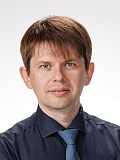 Alexander Gusev — Business Development Director, Webiomed
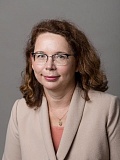 Ekaterina Gutor — Director, Department of Medical Support for Train Safety, Central Directorate of Healthcare – a branch of Russian Railways
 Anton Kokin — Head of the "Medicine" Project Office, United Instrument-Making Corporation
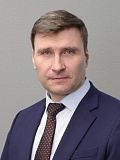 Dmitry Temnov — Director, Department of Digital Development and Information Technology, Ministry of Health of the Russian Federation
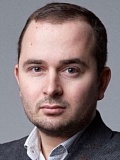 Victor Ushakov — Executive Director, Health Industry Center, Sberbank
Moderator:
 Olga Kobyakova — Central Research Institute for Organization and Informatization of Health Care of the Ministry of Health of the Russian Federation
Olga Sergeevna Kobyakova was born in Tomsk in 1974. She graduated from Siberian State Medical University with a degree in therapeutics, followed by postgraduate and doctoral studies. After graduating from the university, she held the position of a doctor at the Tomsk Regional Clinical Hospital. From 2003 to 2014, she worked in the Department of Health of the Tomsk Region, moving from chief specialist-therapist to department head. In 2012–2014, she studied in London under the EMBA program at Kingston University in the field of "strategic management." As the head of the regional health department, she oversaw the implementation of the program "Modernization of Healthcare in Tomsk Oblast for 2011–2013." According to the results of the program implementation, according to the estimates of the Ministry of Health, Tomsk Oblast has become one of the leading regions. Since graduating from SibGMU, she has combined state service with scientific and pedagogical activities, being a part-time employee of the medical university. In 2008, she created and headed the Department of General Medical Practice at SibGMU. Professor, Doctor of Medical Sciences. Author of 199 scientific publications and educational-methodological works. In 2015, appointed to the position of Rector of the Siberian State Medical University.
Speakers:
 Alexander Gusev — Business Development Director, Webiomed
 Ekaterina Gutor — Director, Department of Medical Support for Train Safety, Central Directorate of Healthcare – a branch of Russian Railways
 Anton Kokin — Head of the "Medicine" Project Office, United Instrument-Making Corporation
 Dmitry Temnov — Director, Department of Digital Development and Information Technology, Ministry of Health of the Russian Federation
 Victor Ushakov — Executive Director, Health Industry Center, Sberbank
Front row participant:
Ilya Blokhin — General Director, Center for Sleep and Awakening Neurotechnologies